
HEPA Air Scrubber
Industrial HEPA filtration that maintains negative air pressure during mold and biohazard work
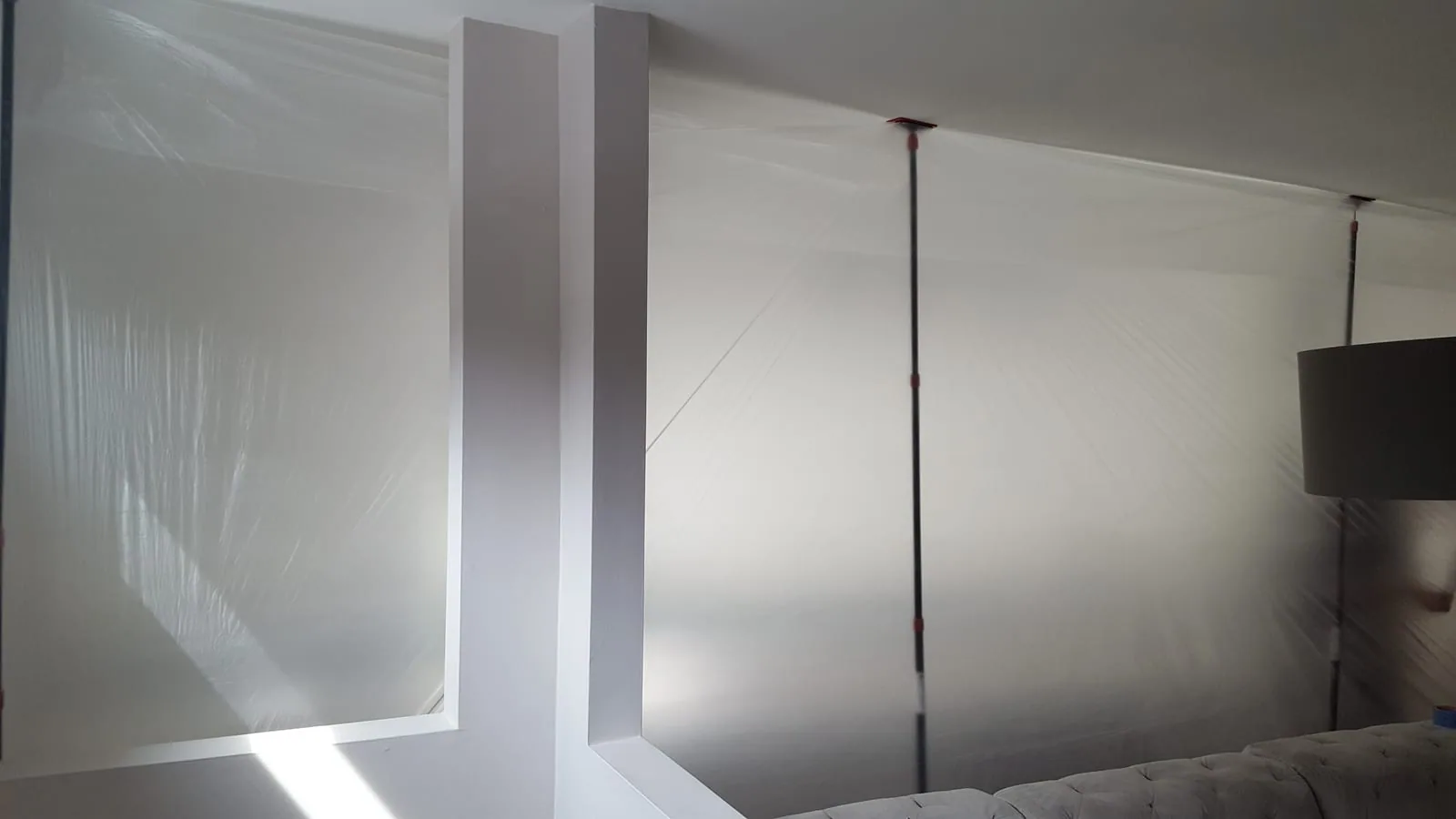
A HEPA air scrubber is an industrial air filtration unit that pulls room air through a HEPA filter (capturing particles down to 0.3 microns at 99.97% efficiency), then exhausts the filtered air outside the containment area. The result: the work zone has negative air pressure relative to surrounding spaces, so any spore-containing or contaminated air flows INTO the containment, not out.
We use HEPA scrubbers on every IICRC S520 mold remediation job at Level 2 containment and above, and on every Category 3 (sewage) water remediation. The purpose is contamination control: without negative air pressure, demolition of moldy drywall or biohazard cleanup spreads spores and contaminated particles throughout the home — turning a localized problem into a whole-house contamination.
On a typical Level 2 mold job we deploy 1-2 HEPA scrubbers maintaining ~4-6 air changes per hour in the containment area. Larger Level 3 jobs scale up to 3-5 scrubbers. Filter changes happen on a documented schedule; spent filters are bagged as contaminated waste.
When we use it
- › IICRC S520 Level 2 mold remediation (10-100 sq ft visible mold)
- › IICRC S520 Level 3 mold remediation (100+ sq ft, or any Stachybotrys)
- › Category 3 (sewage) water remediation requiring contamination control
- › Post-fire S700 cleanup of soot-contaminated areas
- › Asbestos abatement support (coordinated with EPA-licensed abatement contractor)
How to read the output
Negative pressure is verified with a manometer (digital differential pressure gauge) reading the pressure difference between containment and surrounding spaces. Target is -0.02 to -0.05 inches of water column. Filter saturation is tracked via airflow drop — a scrubber that was moving 500 cfm last week and is moving 350 cfm this week needs a filter change.
Models we typically deploy
- › Dri-Eaz HEPA 700 / 500 — workhorse HEPA scrubbers in restoration
- › Phoenix Guardian R — high-capacity HEPA + UV-C combination
- › BlueDri BD-AS-550 / 1000 — value-tier scrubbers for routine S520 work
- › Negative air machines (NAM) — variant designed specifically for asbestos abatement
Limitations
A HEPA scrubber removes airborne particles but doesn't address surface contamination — surface cleaning and demolition still require proper PPE and antimicrobial application. Scrubbers also need correct sizing for the containment volume; an under-sized scrubber can't maintain negative pressure during active demolition when contaminant generation peaks.
HEPA Air Scrubber on real jobs
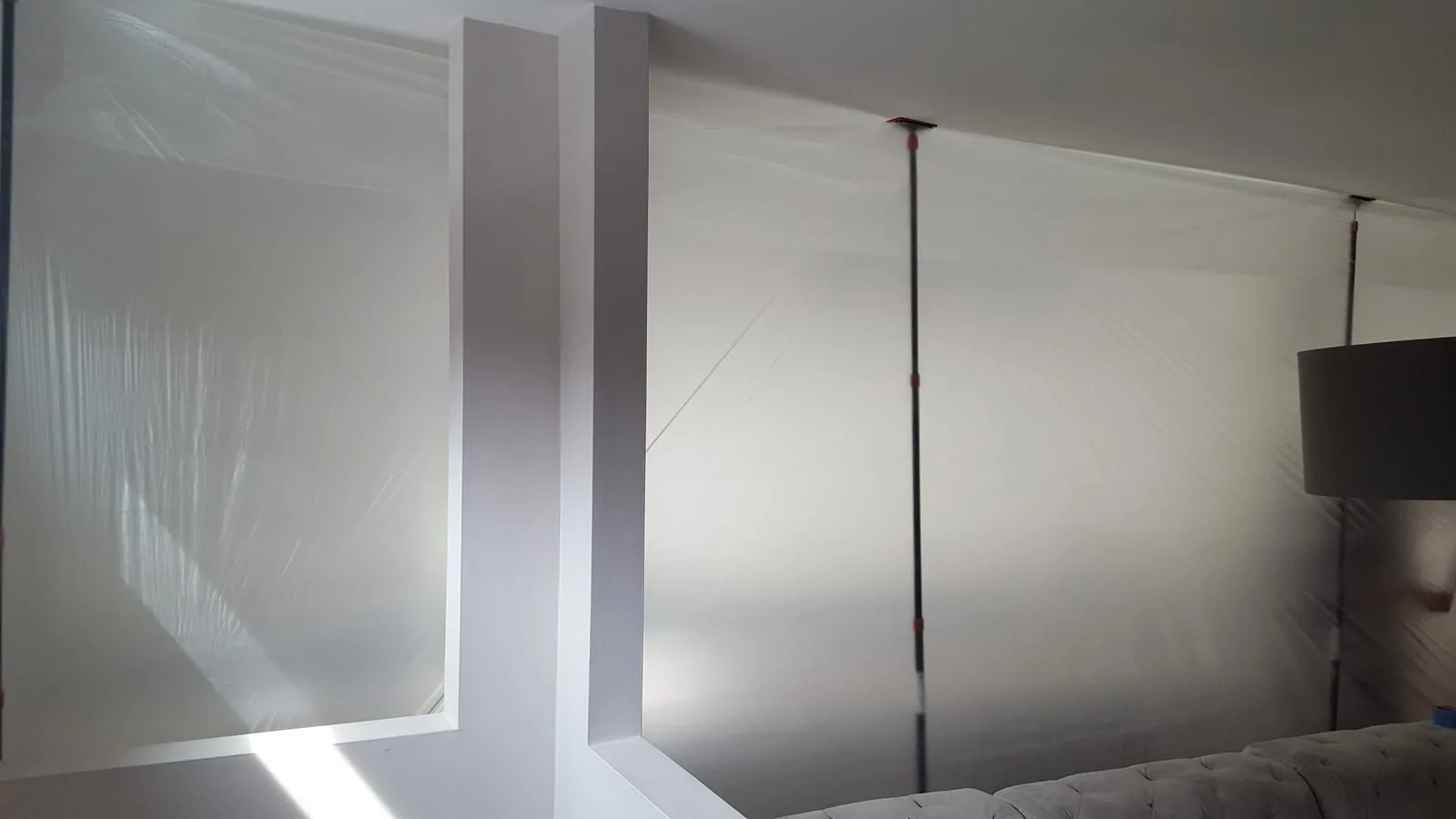
From 911 Storm restoration work in Fairfield County, CT and Westchester County, NY.
Common questions
HEPA Air Scrubber FAQ
Why do I need negative air pressure containment for mold remediation?
Demolition of moldy drywall, framing, or porous materials releases spores and fragments into the air. Without containment those spores spread throughout the home — turning a localized mold problem into whole-house contamination. Negative pressure containment ensures all contaminated air flows INTO the work zone, not out.
How many HEPA scrubbers does a mold job need?
Industry guideline is 4-6 air changes per hour (ACH) of the containment volume. Calculate: room volume in cubic feet × 4-6, divided by scrubber CFM rating. A 1,000 cu ft containment area needs 4,000-6,000 CFM of HEPA filtration — typically 1-2 scrubbers.
Do HEPA scrubbers also kill mold or just filter it?
Standard HEPA scrubbers filter particles only. Some units include UV-C lights or chemical injection for additional treatment, but for mold remediation the primary work is mechanical: removal of contaminated materials + HEPA vacuuming + antimicrobial application + final HEPA air scrubbing. The scrubber is one component of the system, not the whole solution.
Can a homeowner rent a HEPA scrubber for DIY mold cleanup?
Rental units are available but DIY mold remediation above 10 sq ft visible growth is generally not recommended. Beyond the equipment, S520 requires PPE, containment construction, antimicrobial chemistry, and post-remediation verification — all of which require professional training to do correctly. Insurance carriers don't accept undocumented DIY mold work for coverage purposes.
See this equipment on your loss
Free on-site assessment with FLIR thermal + moisture mapping + Xactimate scope. 60-minute response across Fairfield County, CT and Westchester County, NY.
Call (203) 604-2474Other restoration equipment
Damage Doesn't Wait — Neither Do We
60-minute response. Free estimate. We handle your insurance claim.
IICRC Certified • Licensed & Insured • All Major Insurance Carriers