
LGR Dehumidifier
Industrial-grade drying that works in cold and enclosed spaces where standard dehumidifiers fail
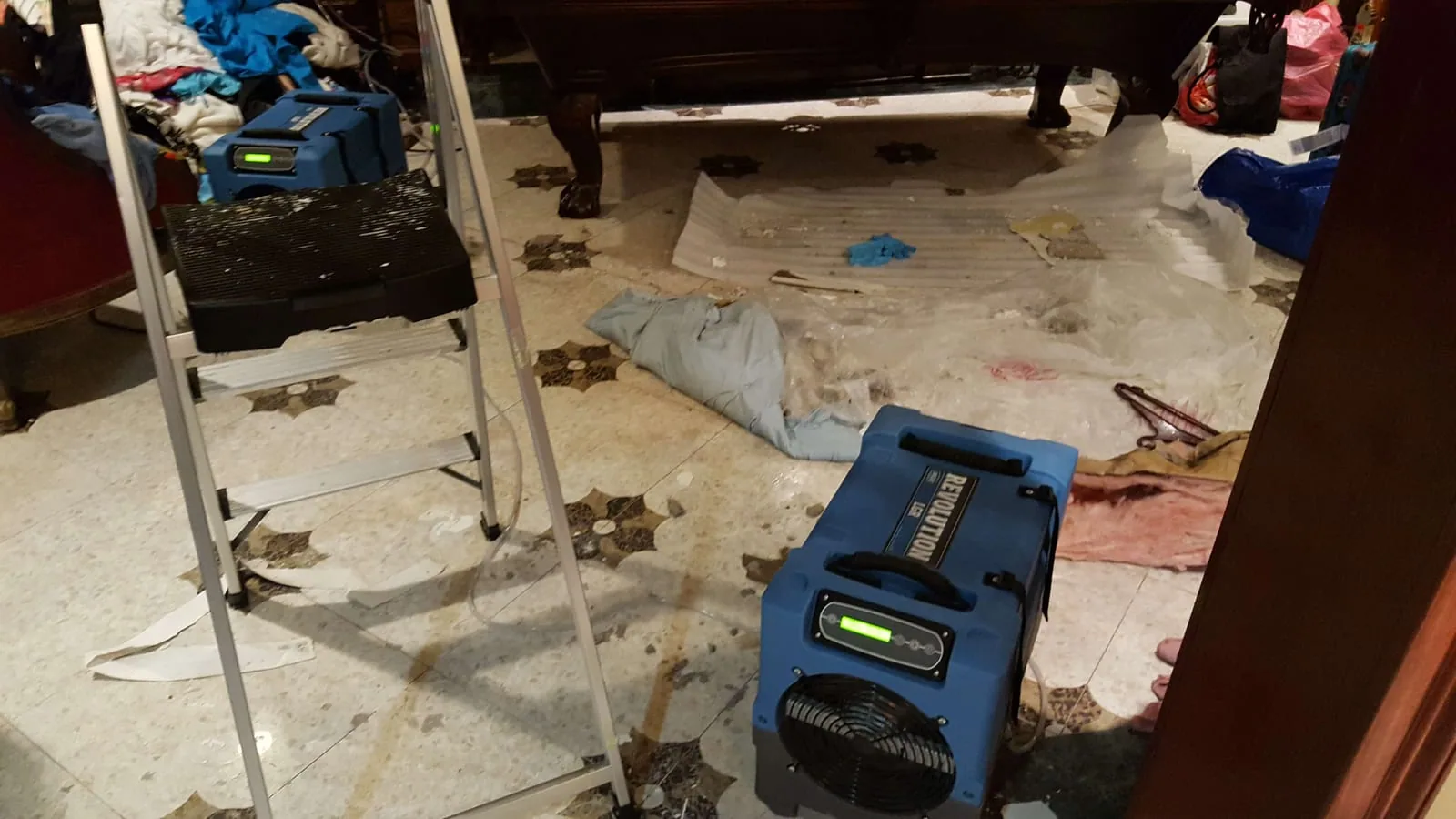
An LGR — Low Grain Refrigerant — dehumidifier is the industrial counterpart of the consumer dehumidifiers homeowners buy at hardware stores. The difference: LGR units extract significantly more moisture per kWh and can operate effectively in colder temperatures (down to about 40°F vs. 60-65°F for consumer units). For restoration drying, this matters enormously.
Standard refrigerant dehumidifiers stop working effectively below about 60°F because the coil temperature drops below freezing and the unit ices up. Basement and unheated-space drying — exactly where most restoration drying happens — requires LGR technology. LGR units can pull grains-per-pound moisture content down far enough to dry structural framing to IICRC S500 target moisture content levels.
On a typical residential water loss we deploy 2-6 LGR units depending on the affected square footage. Each unit runs 24/7 for the duration of the drying phase (typically 5-10 days). Daily moisture readings track progress; equipment runs continue until every test point hits target.
When we use it
- › Every residential water damage drying job (basement, ground floor, upper levels)
- › Cold-environment drying where consumer dehumidifiers would fail
- › Multi-day drying schedules requiring continuous moisture extraction
- › Concrete slab drying after foundation water intrusion
- › Wood floor drying where rapid moisture extraction prevents permanent cupping
How to read the output
The on-board grain-per-pound or relative humidity readout tells you how dry the air entering the unit is. As drying progresses, the readings drop. Combined with daily moisture meter readings at marked test points on the affected materials, you get a complete drying log: ambient air moisture coming down, material moisture content coming down. When both hit target, drying is complete.
Models we typically deploy
- › Phoenix 200 / 200 HT / 200 MAX — workhorse LGR units commonly deployed
- › Dri-Eaz Drizair 1200 — high-capacity LGR for large losses
- › BlueDri BD-76 / BD-130 — value-tier LGR for routine residential
- › Desiccant supplements for very cold environments (below 40°F)
Limitations
LGR units don't work in extreme cold (below ~40°F) — desiccant dehumidifiers are needed for those environments. LGR also can't replace airflow: dehumidification + air movement work together. A dehumidifier alone in a closed room with no air mover dries much slower than the same dehumidifier paired with axial air movers. LGR can also struggle in extremely humid coastal environments where ambient outdoor air is constantly contributing moisture — that's a containment consideration, not a dehumidifier failure.
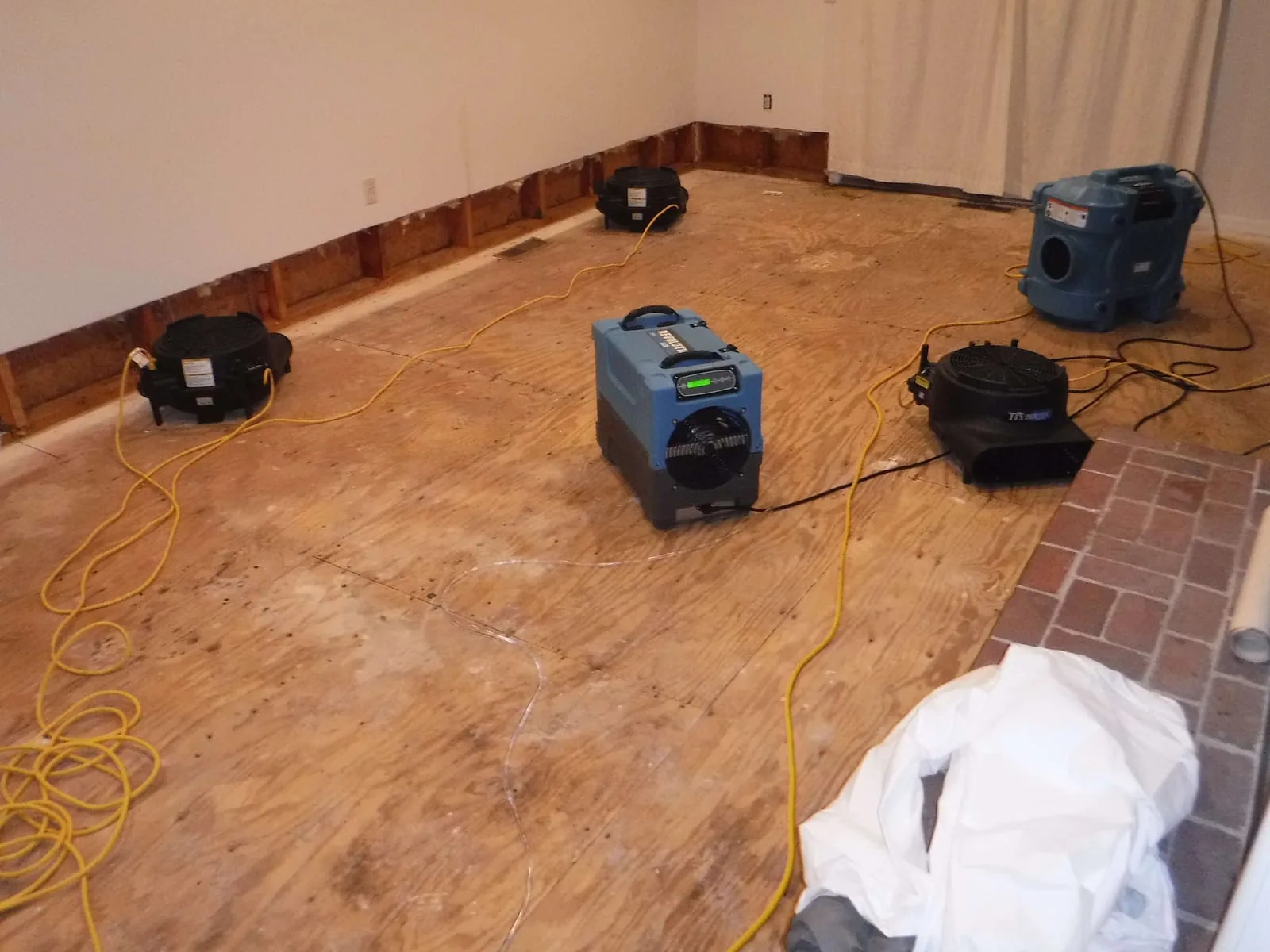
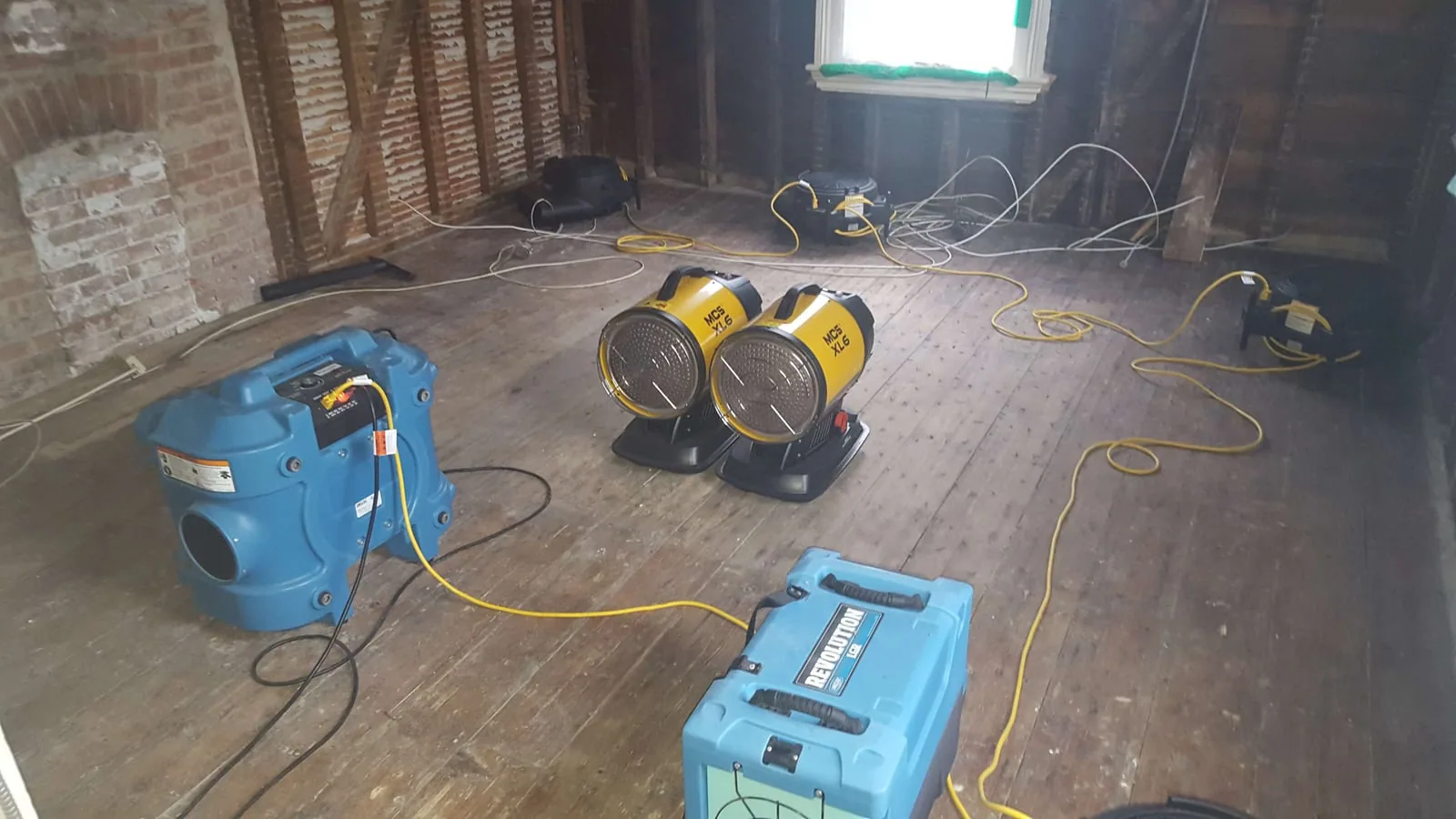
LGR Dehumidifier on real jobs
From 911 Storm restoration work in Fairfield County, CT and Westchester County, NY.
Common questions
LGR Dehumidifier FAQ
What's the difference between an LGR dehumidifier and the one I'd buy at Home Depot?
Consumer dehumidifiers use standard refrigerant cycles that stop working below ~60°F. LGR uses lower-temperature refrigerant cycles that work down to ~40°F and extract significantly more moisture per hour. Consumer units are sized for a single room of summer humidity; LGR units are sized for water damage drying of multi-room footprints in cold conditions.
How many LGR dehumidifiers does my drying job need?
Industry rule of thumb is roughly 1 LGR per 800-1,200 cubic feet of affected space, but the right number depends on water class, material types, and temperature. On a typical 800 sq ft finished basement we'd deploy 2-4 LGR units. Larger losses (multi-room, multi-floor) scale up to 6-10 units.
How long do LGR dehumidifiers need to run?
Until target moisture content is reached at every test point. Typical Cat 1 residential drying: 5-7 days. Cat 2 with antimicrobial: 7-10 days. Cat 3 with major demolition: 10-21+ days. Equipment runs continuously 24/7 during the drying phase.
Can a homeowner rent LGR dehumidifiers for DIY drying?
Sometimes available at restoration-equipment rental shops, less commonly at general rental yards. The bigger question: insurance carriers generally won't accept undocumented DIY drying as evidence of S500-compliant mitigation. If the loss is covered, the carrier-paid restoration scope including professional LGR deployment is almost always the right path.
See this equipment on your loss
Free on-site assessment with FLIR thermal + moisture mapping + Xactimate scope. 60-minute response across Fairfield County, CT and Westchester County, NY.
Call (203) 604-2474Other restoration equipment
Damage Doesn't Wait — Neither Do We
60-minute response. Free estimate. We handle your insurance claim.
IICRC Certified • Licensed & Insured • All Major Insurance Carriers